Augers and Conveyors
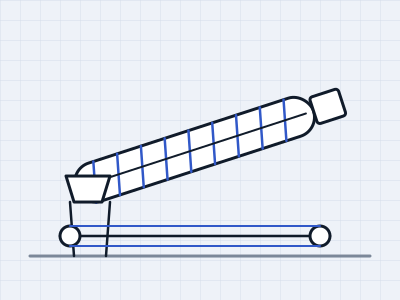
Screws for washing and conveying salt, and belt conveyors that move salt between the stages of a production line.
Salt production lines
Washing raw salt and separating the brine before drying.
Washing removes dirt, suspended impurities and part of the soluble impurities from the surface of the salt crystals. It is usually done with saturated brine rather than fresh water, so that the salt itself does not dissolve during washing.
After washing, the brine is separated from the salt in stages such as hydrocyclones and centrifuges, and the washed salt moves on to drying. The brine can be settled and recirculated within the line.
Screws for washing and conveying salt, and belt conveyors that move salt between the stages of a production line.
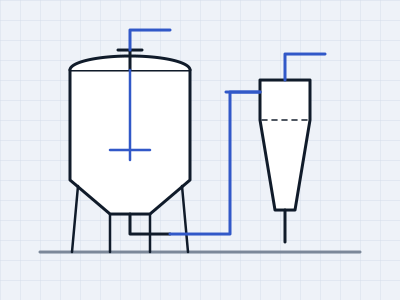
Equipment for holding, mixing and thickening salt slurry and brine in the washing stage.
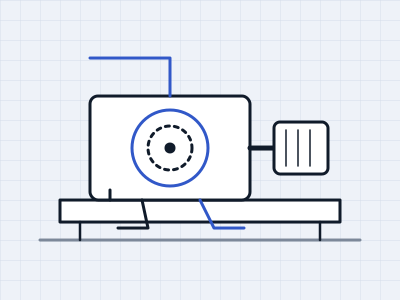
Machines that separate brine from salt crystals by centrifugal force before drying.
Salt drying lines: rotary and surface dryers with their heaters and blowers, reducing the moisture of salt after washing.
Salt refining lines: general stages that raise salt purity — washing, separation, treatment and drying — defined by the raw salt and the target specification.
You do not need all of this ready. Send what you have and we will discuss the rest with you.
Fresh water dissolves part of the salt itself. Saturated brine removes impurities from the crystal surface while limiting salt losses.
Often it can, depending on the available space and the layout of the current line. See production-line modernization or send us details of your line.
Share your requirements with Smart Makina to discuss the equipment and services that suit your project.