Dryers
Dryers that remove the residual moisture from salt after washing and centrifuging, producing dry, free-flowing salt ready for screening and…
Salt production lines
Reducing salt moisture after washing and centrifuging, for dry, free-flowing salt ready for screening and packaging.
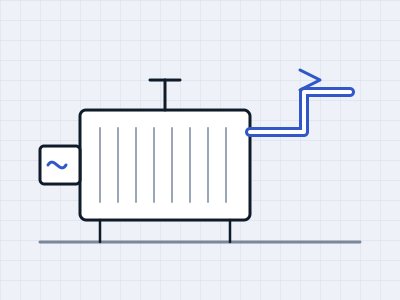
After washing and centrifuging, salt still holds moisture that must be reduced so it does not cake in storage and packaging. Drying uses a dryer in which the salt meets hot air, supplied by a heater and moved by a blower.
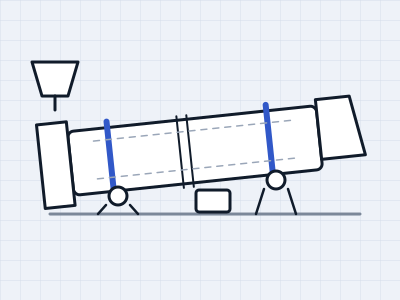
Common types include rotary dryers and surface dryers. The right type depends on the quantity of salt, its moisture and grain size and the space available; a cooling stage may follow drying.
Dryers that remove the residual moisture from salt after washing and centrifuging, producing dry, free-flowing salt ready for screening and…
Heaters that supply the hot air required by salt dryers.
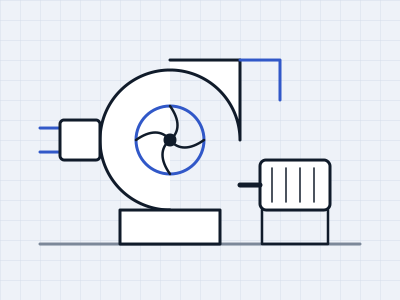
Blowers that move air through the production line: drying and cooling air, and the extraction of humid air.
Salt washing lines: equipment that washes raw salt and separates the brine before drying, such as washing augers, tanks, hydrocyclones and centrifuges.
Salt packaging lines: preparing dry salt for packing with screening and conveying, and linking the packing stage to the rest of the line according to the…
You do not need all of this ready. Send what you have and we will discuss the rest with you.
In a rotary dryer the salt moves through an inclined rotating drum; in a surface dryer hot air passes through a layer of salt. The choice depends on each line, and we discuss it after reviewing the project information.
The energy source depends on what is available on site and the project requirements, which is why we ask about it when reviewing a request.
Share your requirements with Smart Makina to discuss the equipment and services that suit your project.